| Detail | What providers state | Planning use |
|---|---|---|
| Lead time | Start date must be at least 7 business days from the request | Rule out last-minute dates. Work backwards from a birthday, anniversary or proposal. |
| First reply | Customer service responds within 24h of an email request | Treat the reply as the start of the booking, not the booking itself. |
| Date and time | Chosen by the customer at booking | Pick a time when you or your guests can stand where the screen is visible. |
| 60-second option | 60 s video or photo, shown 22 times per day | Suits a message that needs names, a short story or a video. |
| 15-second option | 15 s video or photo, shown 88 times per day | Suits a short line that must be easy to catch on camera. |
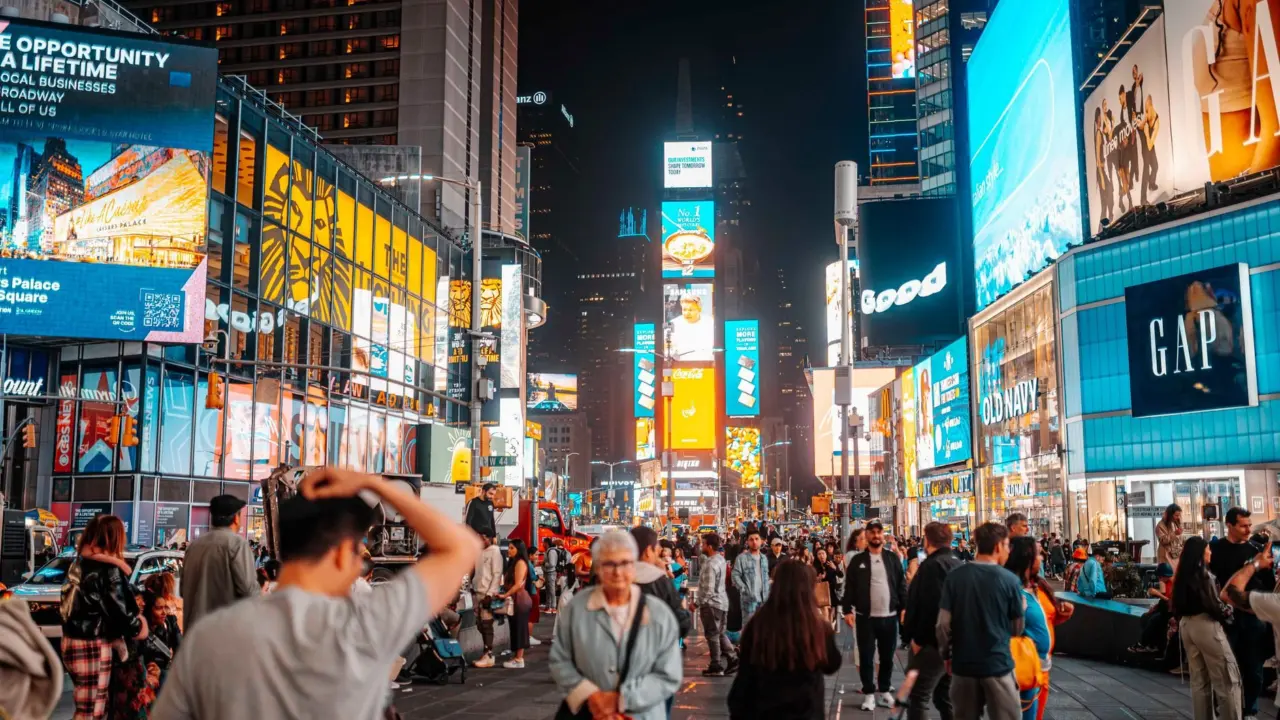
| Screen size and place | One operator’s billboard is 55 x 31 ft at 1560 Broadway, between 46th and 47th Streets | Know where to stand before the slot plays. |
These figures come from the Welcome To Times Square business page and the Times Square Billboard operator’s site. Packages and screens differ by provider.
So how do Times Square billboard messages work? You buy a scheduled slot in an advertising loop: pick a date and time, submit artwork for approval, and the seller plays it a set number of times.
For the wider overview of planning a Times Square billboard message, start with the main guide. This page explains what happens behind the order form.
What a booking means in practice
Anyone can buy a personal slot, provided the artwork is approved and the seller has the date free. The Times Square Billboard operator says its screen can show a birthday, a marriage proposal, an anniversary or a simple declaration of love. An LED display supplier’s guide describes a Times Square billboard as an outdoor display in Midtown Manhattan that sells scheduled exposure to pedestrians. A personal message is therefore a small advertising purchase, not a free public feed.
That commercial model shapes every decision you make.
- Choose a short slot for more chances. The standard 15-second option plays 88 times per day, against 22 plays for the 60-second option, according to the Welcome To Times Square business page. If your goal is to film a short line, more plays give you more opportunities.
- Choose a longer slot for more content. The 60-second option gives room for a longer video or a photo with several lines, but each play comes round less often.
- Expect to share the screen. LED displays can schedule multiple advertisers and change creative without replacing printed material, so your message is one item in a rotation rather than a permanent fixture.
- Set the budget before designing. The Times Square Billboard operator advertises personal messages from $150, while the standard package for Billboards 1 and 2 at Welcome To Times Square is $500 per day. For a comparison of prices, see how much does a times square billboard message cost.
A message does not stay on screen continuously. It appears each time its slot comes round, and each play lasts as long as the option you bought. Welcome To Times Square also lists a premium Maxi package that runs a video or picture for 1 minute per hour for 24h for 30 days at $11,250 in total.
The advertising loop behind the message
The screen is a digital billboard, and digital billboards are part of out-of-home (OOH) advertising, the category the Times Square Alliance uses for its advertising and sponsorship listings. Providers describe slots by plays per day, so your message returns at intervals during the day rather than running without a break.
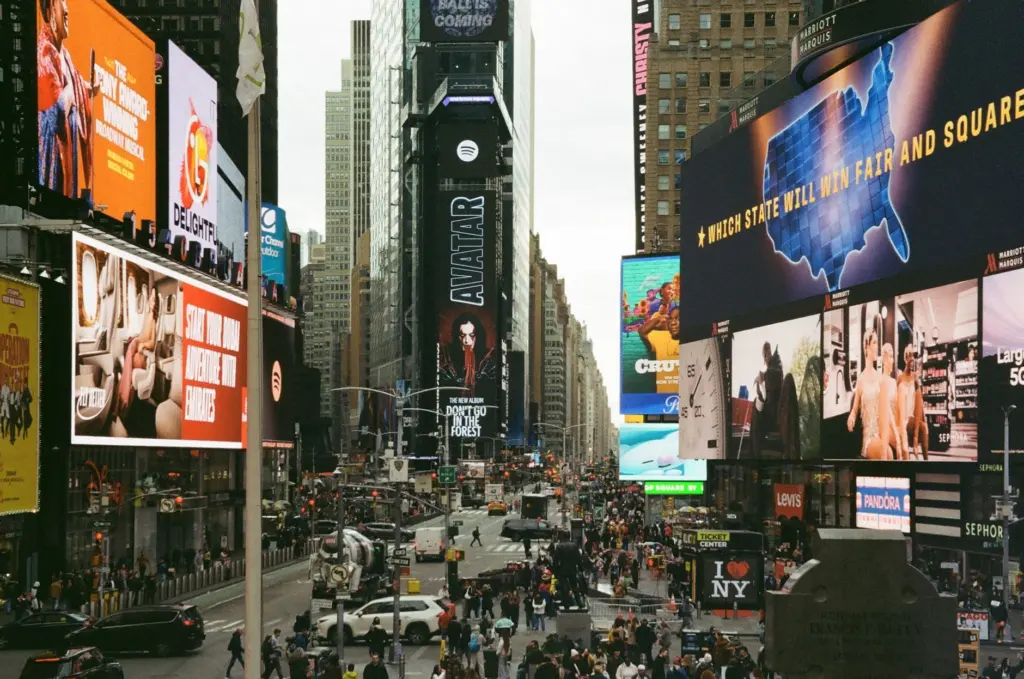
LED screens suit this model because content can change without new printed material. Clear Channel Outdoor says its Times Square displays can pulse with light, deliver a live feed or update in real time. It also notes that Kodak rebuilt its Kodarama sign in 1999 as the district’s first LED-screen billboard. A personal slot is simply a scheduled file played in that system on the day you book.
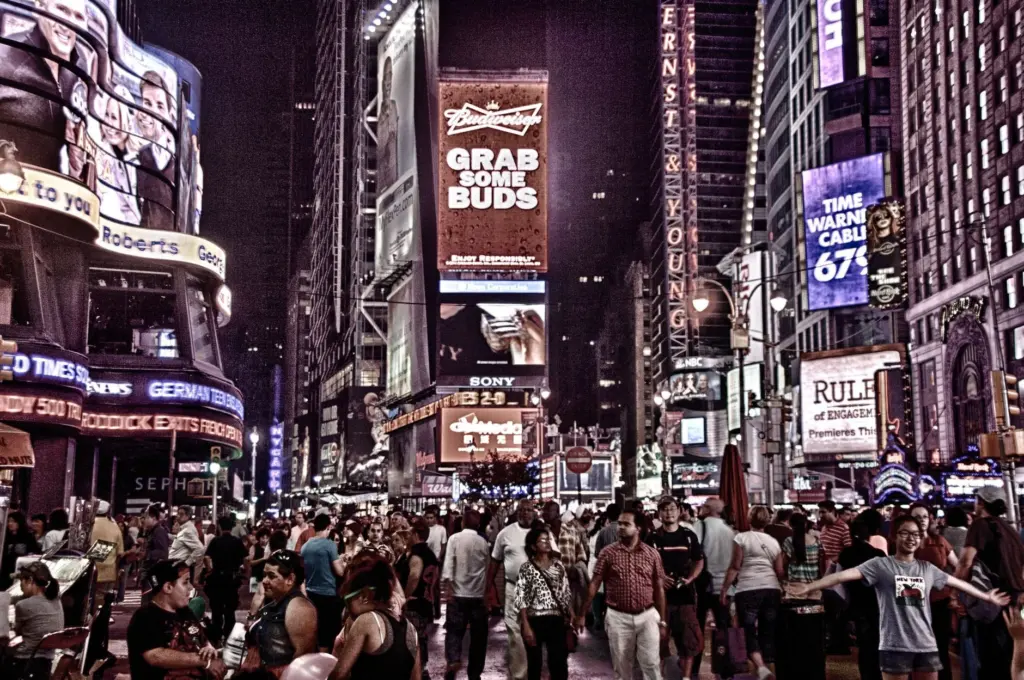
Time on a screen can also be sold in much larger blocks. Clear Channel describes a roadblock, where one advertiser owns the full share for an extended period, and a sync, where one advertiser dominates all of the screens at once. A personal message sits at the small end of the same scheduling system.
Who owns the screens and who sells the slots
The big screens are owned and run by media companies, and personal slots are sold by providers that book time on a screen. The Times Square Alliance advertising page lists Clear Channel Outdoor as a market leader in spectacular sign displays that has long dominated Times Square. The same Alliance page describes the ABC Supersign as a 3,685 sq ft electronic icon.
Not every sign faces the pedestrian crowd. The Alliance also lists Midtown Mosaic digital signs that target eastbound and westbound traffic on Manhattan’s 42nd Street, which is a different audience from people standing on Broadway. For a closer look at the displays themselves, see digital billboards in times square.
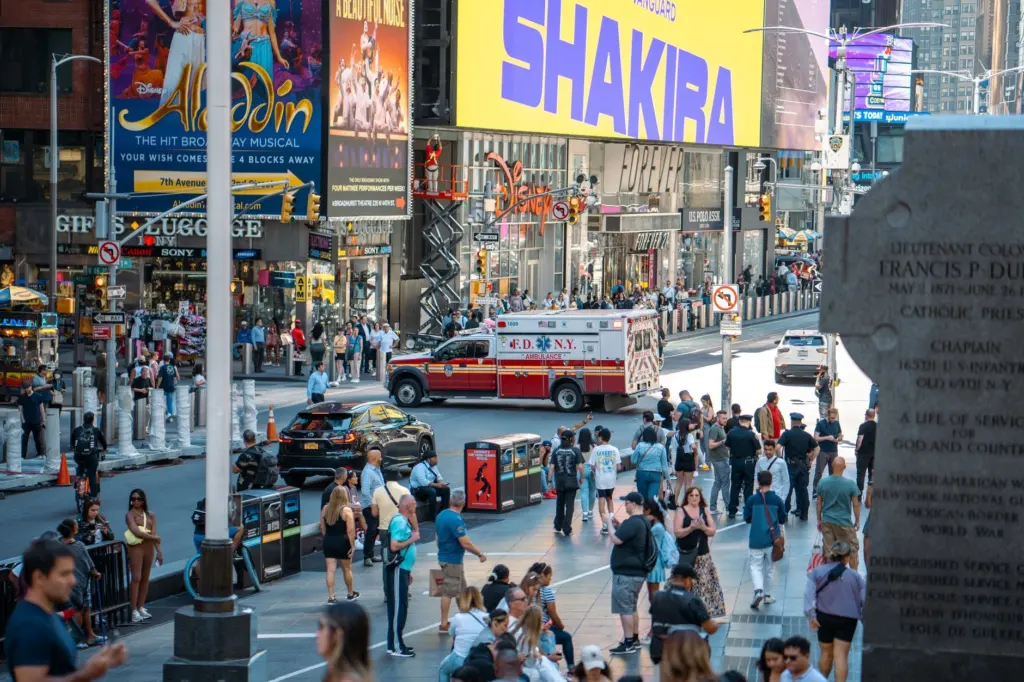
Before paying, check whether the company taking your order runs the screen or sells time on it. The Times Square Billboard operator names its own location, 1560 Broadway between 46th and 47th Streets, which makes it easy to confirm where your message will play. The LED supplier’s guide adds that screens are booked by choosing a screen, agreeing the number and length of plays, submitting approved artwork and booking through the media seller.
From order form to screen
The order moves through a short chain of steps. Exact details vary by provider, but the typical sequence looks like this.
- Pick the screen and package. Decide the screen, the length of the play and the number of plays.
- Choose the date and time. The Times Square Billboard operator asks you to select a preferred date and time at booking. Welcome To Times Square requires a start date at least 7 business days from the request.
- Send the request and artwork. Welcome To Times Square says customer service responds within 24h of an email request. Artwork must be approved before it is booked through the seller.
- Wait for the scheduled play. Your video or photo runs in the loop at the times set for your package.
- Ask about confirmation. Welcome To Times Square says that within 3 business days after a programmatic campaign wraps up, you receive a simple report showing how many people saw the ad.
That report is described for programmatic campaigns, so for a one-off personal slot, ask the seller what confirmation it sends before you pay. Your own footage is also a practical record, and the 15-second option’s higher number of plays gives you more chances to capture it.
Where to stand and watch
The best viewing spots are the pedestrian areas around Broadway. Clear Channel says its displays operate in dwell zones such as Duffy Square and the Broadway Pedestrian Plaza, where people tend to stop rather than walk past. The Alliance says brands on Broadway Plaza Digital enjoy some of the longest dwell times in out-of-home advertising, though it gives no figure.
For a personal message, stopping time matters because your slot plays only at set times. Stand where the booked screen is visible, with the camera ready a little before the scheduled time. If your screen faces a different direction from the plaza, check the location with the seller first.
Frequently asked questions
Can one advertiser take over every screen?
Yes, on some packages. Clear Channel describes a sync, in which one advertiser dominates all 6 screens simultaneously, in its listing on the Times Square Alliance advertising page. A personal slot does not work this way.
How many people see the screens?
The Alliance page says the ABC Supersign is among the must-see attractions for the 1.5 million tourists and residents who pass through Times Square daily. That is an operator-stated figure for the square, not a count of viewers of any single message.
Does a message have to be a video?
No. The Welcome To Times Square packages accept a video or a photo, and the operator’s booking page also describes a photo-billboard process.
Can the screen show anything beyond a fixed picture?
Yes. Clear Channel Outdoor says its Times Square displays can deliver a live feed or update in real time, though a personal message is normally a scheduled video or photo.