How long does a Times Square billboard message last? On the hourly photo or video booking listed on BookYourTour, each spot runs 15 seconds, repeating every hour for 24 hours on the selected date. Other packages set their own number and length of plays.
Spot length is only part of the picture. This guide explains the mechanics behind any times square billboard message: how the screen’s schedule is built, how repeats work, and how to line up your own viewing.
How the screen schedule works
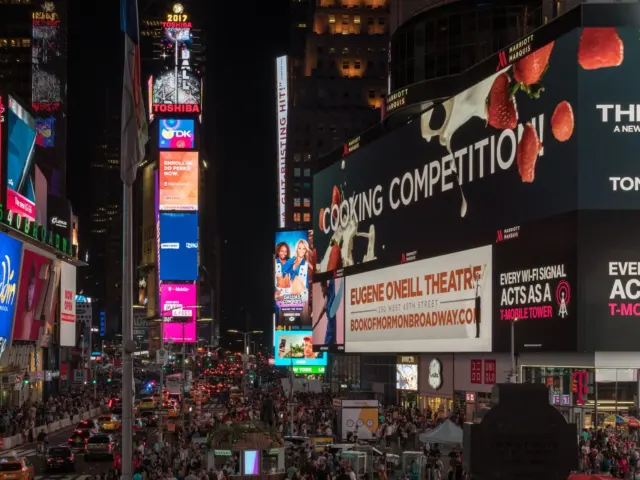
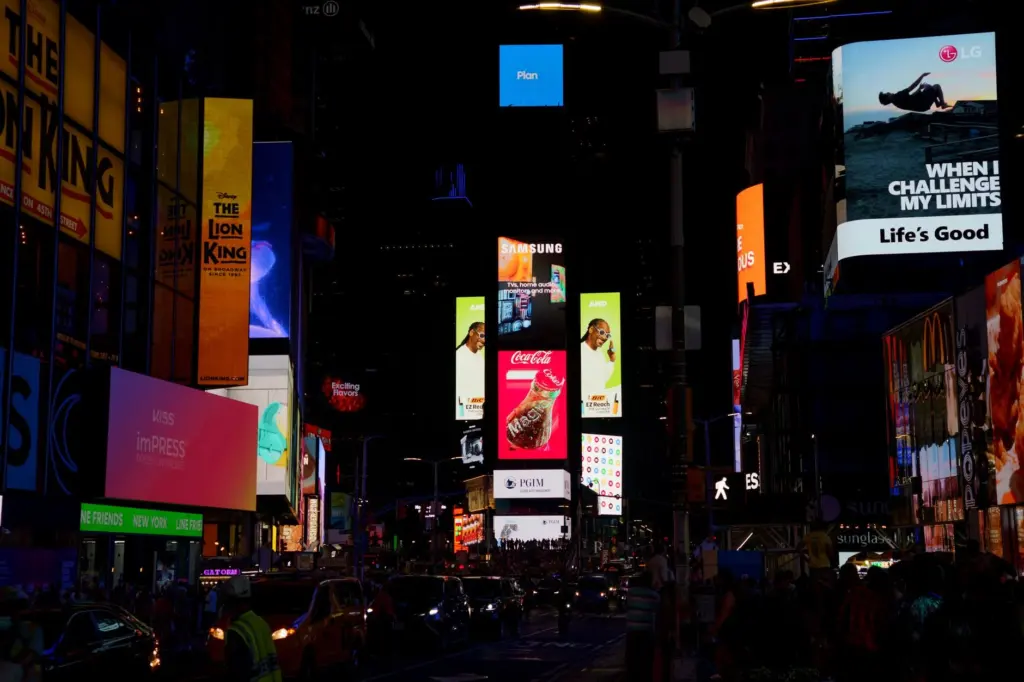
A Times Square digital billboard is a shared, scheduled medium. Eager LED Screen describes a Times Square billboard as an outdoor advertising display in Midtown Manhattan that sells scheduled exposure to pedestrians. It adds that LED displays can schedule multiple advertisers and change creative without replacing printed material. Your message is therefore one item in a rotation, the ad loop, alongside other advertisers’ content. It appears, gives way to the next item, and comes back when the schedule returns to it.
The playlist is not frozen either. BM Outdoor notes that digital billboards in Times Square can be updated instantly, so advertisers can change content based on time of day. The same screen can carry different content at different points in the day. A confirmed slot from the operator is a far better planning tool than a general guess about when your content might be on.
The district’s signage has a long history behind this. A city resolution renamed the intersection of Broadway and Seventh Avenue from Long Acre Square to Times Square. LED video entered the area’s signage in 1996 with Morgan Stanley’s three-tiered message center, built by Daktronics. Looping digital content is a recent layer on an established out-of-home advertising district. The rotation idea is simply how that layer shares limited screen time among many buyers.
Spot length and repeat frequency
On the booking listed by BookYourTour, a photo or video displays for 15 seconds every hour for 24 hours on the selected date. The same listing says the operator guarantees 22 showtimes within 24 hours in case of technical difficulties. Read the guarantee as a floor that applies if something goes wrong. It does not describe a different schedule. Under the normal hourly pattern, your message returns each hour of the booked day.
What a 15-second spot means for you
A spot of 15 seconds is a short window. Anyone who wants to see the message live needs to be looking at the right screen when it starts, because a late arrival can miss it entirely. If a friend or partner is meant to be surprised, plan around the repeating schedule rather than a single moment. The message coming back every hour gives you more than one chance, which a single play would not.
What a repeat does and does not give you
A repeat is the same creative returning at the booked interval. It is not a longer showing. Repeats improve your odds of being in front of the screen at the right moment. They do nothing to stretch the length of each appearance. Other packages vary this: the number and length of plays are agreed with the media seller, so the 15-second hourly pattern should not be assumed for every product.
Single showing versus a repeating time slot
A single showing is one play of your creative. A repeating time slot is a booked period during which that play returns on a schedule. Eager LED Screen makes the same point about buying formats: a short shared slot, a repeated campaign and an exclusive takeover buy very different amounts of screen time. The table compares them on what each fixes and what to do with that.
| Format | What the booking fixes | Planning use |
|---|---|---|
| Hourly photo or video display | 15 seconds every hour for 24 hours on the selected date; 22 showtimes guaranteed within 24 hours in case of technical difficulties | Suits a personal message where a viewer can catch any of several returns on the day. |
| Short shared slot | A brief appearance on a screen that also carries other advertisers | Treat it as a narrow window and be at the screen when it is due. |
| Repeated campaign | An agreed number and length of plays, booked through the media seller | Get the play count and spot length confirmed before paying. |
| Exclusive takeover | Screen time that differs substantially from a shared slot | A different product from a personal message booking; compare it on screen time, not price alone. |
Figures for the hourly display come from the BookYourTour listing, and the format comparison from Eager LED Screen.

Choosing and confirming your slot
You cannot pick the exact minute your message appears. Booking flows let you state a preference, and the operator assigns the slot. On the Times Square Billboard booking steps, you select your preferred date and time for the display. The BookYourTour listing says you receive confirmation of your assigned time slot within 24 hours. The order below shows how the pieces fit together.
- Prepare your creative. The steps for getting a photo ready are covered in how to put your photo on a times square billboard.
- State your preferred date and time. Treat it as a request, since the assigned slot is what counts.
- Submit to reserve the slot. The slot is reserved only after submission, so an unsent draft holds nothing.
- Wait for the assigned slot. Confirmation arrives within 24 hours on the listing described above, and it replaces your original preference.
- Make any changes in time. A photo or video can be changed as long as the request is made 24 hours before the display date.
The difference between a preference and an assignment matters most for tight plans. If a proposal or surprise depends on an exact moment, treat the confirmed slot as the fixed point and build the rest of the day around it. For which days and hours suit a planned moment, see best time to show a times square billboard message.
Being in front of the screen at the right moment
Work from the confirmed slot, not from the date alone. Because the display repeats on the booking described above, you do not need to guess a single minute. You do need to know which part of the booked day you are aiming for. The BookYourTour listing also says you can see the billboard in person and watch the live stream online. That helps in two ways: relatives who cannot travel can watch remotely, and you can confirm the message is playing before anyone commits to standing outside.

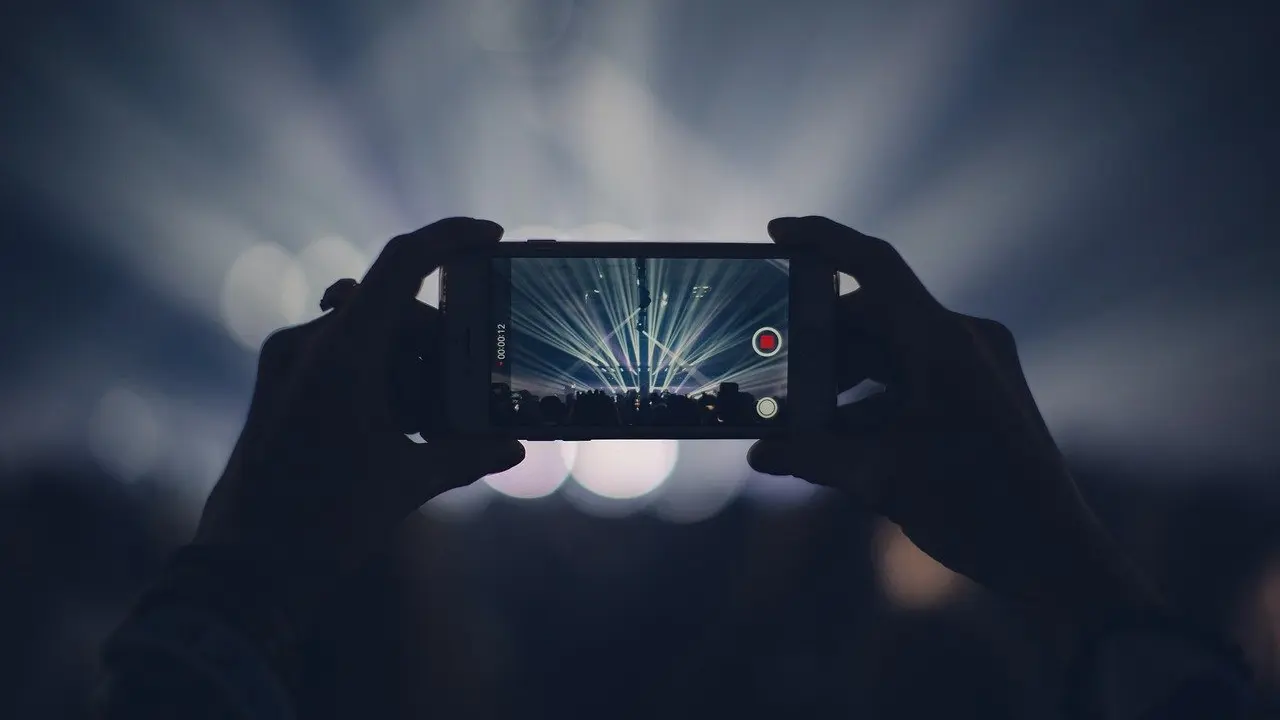
Short windows reward preparation. Start recording before the spot is due rather than when you think it has started, since a late start can lose the opening moments of a brief display. Hold the phone steady, keep the screen in clear view, and give the job of filming to a second person if you want to watch the message yourself. If the first return goes by too quickly, the next return of the schedule is your second chance.
What a play does and does not measure
A play is a delivered appearance on the schedule, and it says nothing about who watched. Eager LED Screen separates delivered plays, estimated impressions, audience recall and sales, and says none is an interchangeable measure of success. It also reports roughly 220,000 pedestrians per day in 2024 and about 330,000 on the busiest days. Those are district footfall figures rather than views of an individual screen.
For a personal message, that distinction is useful. The crowd’s size does not tell you how many people will see your message, and it does not promise anyone will notice it. The audience you can count on is the group you bring and the people you tell to watch, which is why the slot confirmation and live stream matter more than footfall.
Frequently asked questions
Can I make my message stay on screen longer?
Length comes from the package. The number and length of plays are agreed with the media seller, so ask for a longer or more frequent play schedule before booking.
Can I change my photo after booking?
On the BookYourTour listing, yes. A change must be requested at least 24 hours before the display date.
Can someone watch if they cannot be in Times Square?
The listing says viewers can watch the billboard in person and also follow a live stream online.
What happens if a technical problem interrupts my display?
The operator in the listing guarantees 22 showtimes within 24 hours in case of technical difficulties.
Does a busy Times Square mean more people see my message?
Not necessarily. Reported pedestrian counts describe the district, and plays and impressions are separate measures.