The best times square billboard message ideas are short, specific and readable in a single glance: a name, a feeling and one line. Choose the wording by tone first, then check its length against the display slot you plan to book.
Most people read a screen here while walking, so every idea below is built for a quick look. If you are still deciding what kind of times square billboard message to send, start with the tones below. The wording works for any occasion, so adapt it freely.
How to choose wording that works on a big screen
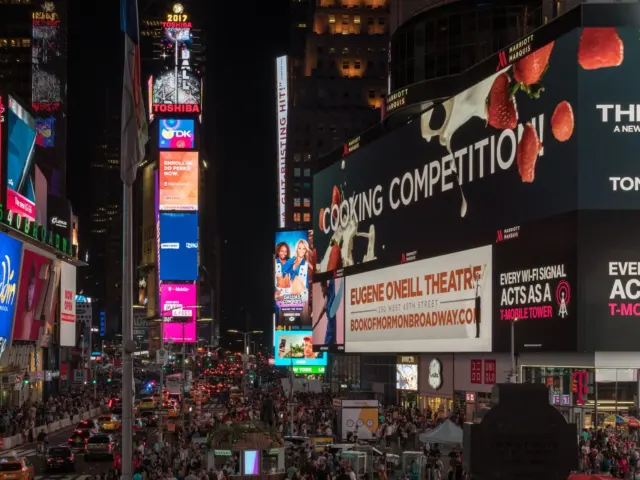
Times Square sits at the intersection of Broadway and 7th Avenue in Midtown Manhattan, and Broadway crosses the area diagonally, forming two triangular squares. A billboard vendor describes over 350,000 visitors daily and calls it the most recognizable outdoor advertising destination in the world. Your words compete with other digital billboards in this out-of-home advertising setting, so plain wording wins.
The ideas are not ranked, because tone is a matter of fit rather than quality. Judge any draft against these criteria:

- Glance length: keep the message to a line or two. If a friend cannot repeat it after one look, cut it.
- A named recipient: a first name or a nickname makes the screen feel personal at once.
- A single idea: one feeling or one joke per message. Two jokes dilute each other.
- Tone that suits the audience: a sincere line for a partner, a playful one for friends and a bold one for a team.
- Provider acceptance: each provider sets its own content guidelines, so confirm your wording is accepted before you finalise it.
With those filters set, the examples below are sorted from warmest to lightest.
Message ideas sorted by tone
Warm and sincere
Sincere lines suit parents, partners and close friends, and they need the least decoration. State the feeling directly and sign off with a name. Avoid long sentiments, because a screen rewards the sentence you would say out loud in a few breaths.
- Gratitude: “Thank you, Mom. We see everything you do.”
- Pride: “Priya, you did it. We are so proud.”
- Affection: “Maya, you make every day brighter. Love, Sam.”
The limitation is that sincerity can read as generic. A real detail, such as a nickname or a shared phrase, does more work than extra adjectives.
Funny and playful
Funny Times Square billboard messages work best when the joke is the whole message. Aim the humour at a shared habit rather than a personal sore spot, and remember that the recipient will be standing in a crowd when they see it. These suit friends, siblings and colleagues who enjoy teasing.
- Running joke: “Dan, your dad jokes have now reached Broadway.”
- Group chat: “Alex, this is the only way to make you read the group chat.”
- Mock fame: “Leo: yes, that is your name in lights. No, we will not stop talking about it.”
Playful lines are the easiest to overwrite. If the set-up needs explaining, the joke is too long for a glance, so swap it for a simpler one.
Group and family
Group messages suit reunions, teams and family trips, because everyone present can claim the line. Name the group rather than listing individuals, which keeps the text short and avoids leaving anyone out.
- Family: “The Garcia family was here, and we are loud.”
- Team: “Team Carter: best crew in Manhattan.”
- Reunion: “Same old crowd, louder than ever.”
Wording tied to a single occasion follows its own conventions. If you are weighing a happy birthday message on times square billboard, treat these group lines as a base to adapt.

Short, bold and curious
Very short lines suit surprises, because they create a moment before the reader has finished the sentence. They also leave room for a larger name. The trade-off is that they say less, so they depend on the recipient knowing what the message means.
- Prompt: “Nina. Look up.”
- Curiosity: “Ben, check your phone.”
- Playful dare: “Tom, you are on the screen. Turn around.”
Interactive brand screens in Times Square use QR codes, text messages and hashtags. For a personal message, plain words are usually the better choice, because a viewer should not have to act to understand the line.
Writing for a few-second glance
Display time is the real constraint, and it is set by the slot you book. A provider lists three slot lengths with different display frequencies, and the length affects how much wording the screen can carry.

| Slot length | How often it appears | Planning use |
|---|---|---|
| 15 seconds | 4 times per hour, 88 times per day | Suits a name and one short line. It repeats most often, so the message gets the most chances to be spotted. |
| 30 seconds | Twice an hour, 44 times per day | Leaves room for a set-up and a payoff, which helps funny or two-part wording. |
| 60 seconds | 60 seconds per hour, 22 times per day | Fits a sequence of lines, but it appears least often, so keep each line short. |
These display figures come from the billboard provider’s published slot details.
A longer slot does not mean longer sentences. Treat the extra time as room for pacing, such as a name first and a punchline second, rather than space for more words. For most personal messages, a single strong line suits the shortest slot, and the longer slots are worth considering only when the message has a clear sequence.
Where the screen sits also affects how people see it, so read through times square billboard locations for personal messages before you settle on final wording.
Drafting and testing your wording
Start by writing several versions of the same message, then cut each one by half. Notice which words survive every cut. These are usually the name and the feeling, and everything else is optional.
Then test the survivors on a phone. Type the message at a large size, hold the phone at arm’s length and ask someone to read it at a glance. If they hesitate, simplify.
Check these points before you submit the final text:
- Read it aloud. If you stumble, the screen will be harder to read than you expect.
- Check spelling of the name. A misspelled name cannot be fixed once the slot is running.
- Confirm acceptance with the provider. Content guidelines belong to the provider, so ask about humour, names and any wording you are unsure of.
- Decide on extras. Some providers offer add-ons, such as a professional photoshoot, which can help you capture the moment.
Frequently asked questions
How much does a Times Square billboard slot cost?
One provider lists $500 per day for a billboard. Prices differ between providers and screens, so confirm the current rate with the one you choose.
Can I use humour in my message?
Yes, if the provider’s content guidelines accept it. Keep the joke short and aimed at something you and the recipient share.
Can I add a photo to the display?
Some providers offer visuals. A billboard company advertises a professional photoshoot to enhance the billboard experience, and its wording does not say whether you can add your own photo to the screen. Ask your provider.
How can I confirm my message actually ran?
Ask about reporting. One advertising provider states that every campaign includes free proof-of-play and live monitoring.